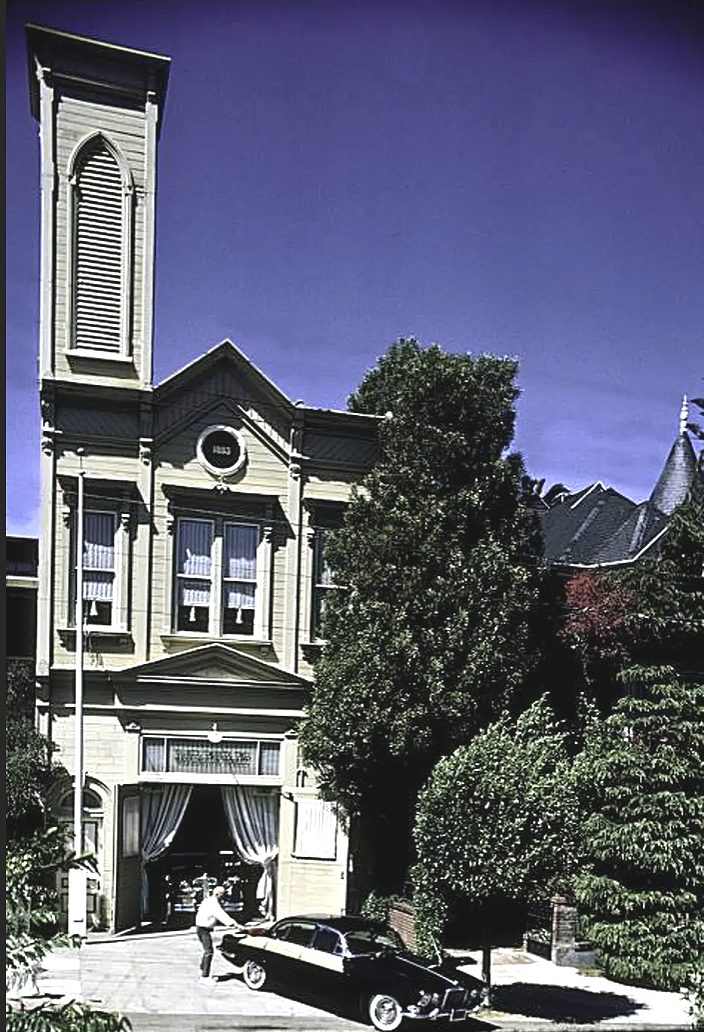
John Dickinson in front of his converted firehouse residence, San Francisco, California. Copyrighted image used with the permission of Fred Lyons
It turned out that John Dickinson was a great pal of Larry Maloney who had a retail shop across from theVogue Theatre on Sacramento Street. Larry’s was the first shop on either coast to make a name for itself selling bleached pine antique furniture alongside of stark white household accessories. It didn’t hurt that Larry, a brilliant merchandiser in his own right, happened to have the legendary designer John Dickinson whispering in his ear. My then-husband and I opened a kitchenware shop across from Larry just as the Cuisinart food processor that chopped, minced, diced and pureed food in a jiffy was introduced from France and revolutionized American cooking--and shopping, too, I am happy to report.
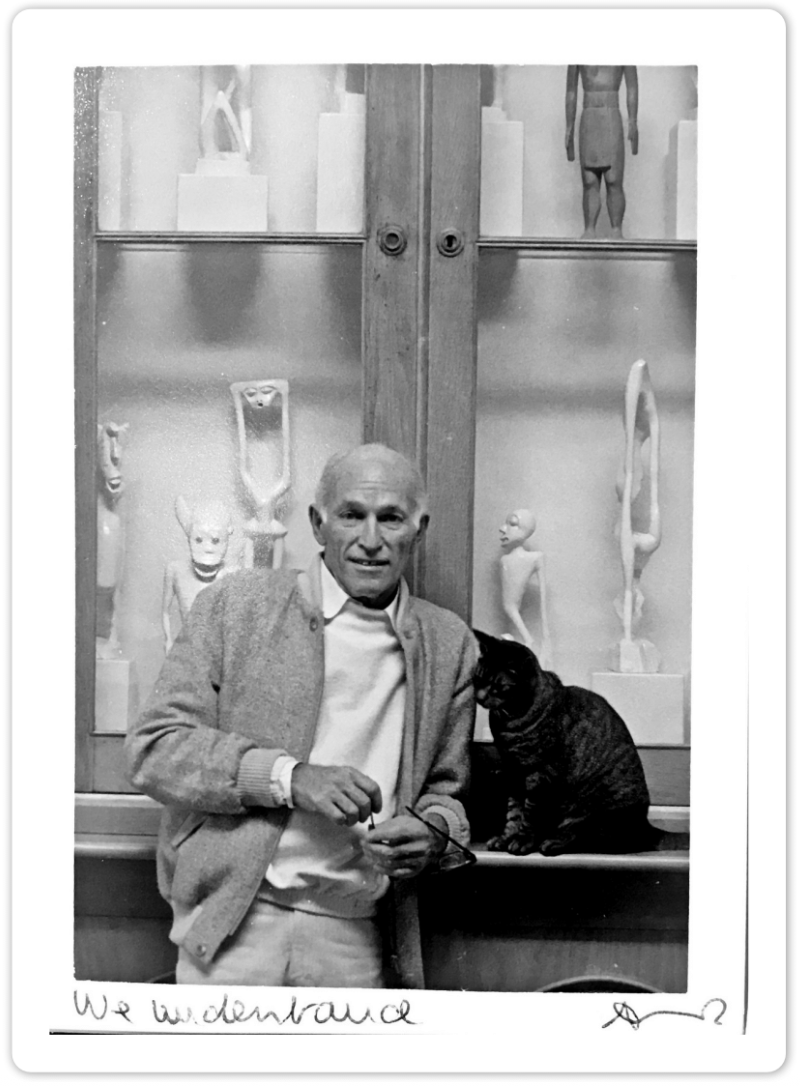
“We Understand”- John Dickinson, photographed by Victor Arimondi. Copyrighted image used with the permission of the estate of Victor Arimondi.
John used to swing by Larry’s shop most mornings for coffee. So did Forrest and I, that’s how we all ended up hanging out. It was quite the coffee klatch and the San Francisco Chronicle was integral to our daily ritual. John and Larry dished dirt on a scale I had never known before. They brought the boldface names in the columns to life for us. None of the blind items in Herb Caen’s insider gossip or Frances Moffat’s society columns were blind to them, or, at least not blind for very long. Those were the days when an innuendo hurled by Herb could permanently attach to a target’s reputation and a mere mention by Frances that a certain debutante was seeing a jazz musician could give the girl’s poor father a heart attack over the morning paper. John was particularly well informed regarding that infamous incident involving the socialite and her butler whom she fired upon unexpectedly returning home from her Sonoma ranch one Saturday evening. Leave it to John to have the inside track on both the upstairs and the downstairs versions of that evening’s events. The socialite had quarreled with her philanderer husband and stormed back to their Pacific Heights mansion only to walk in on the drag party to beat all drag parties. Imagine her reaction to discovering her butler and his cronies decked out in her gowns, her furs, and her jewels, dining on her best china and Baccarat crystal in her very own candlelit dining room. John wiped tears from his eyes as he regaled us with tidbits. I was new to San Francisco; my husband’s pioneer family were fourth generation residents, but my husband had been raised on the East Coast, as had I. Now, over coffee with John and Larry, the two of us were privy to what the Chronicle’s three-dot journalism merely alluded to.
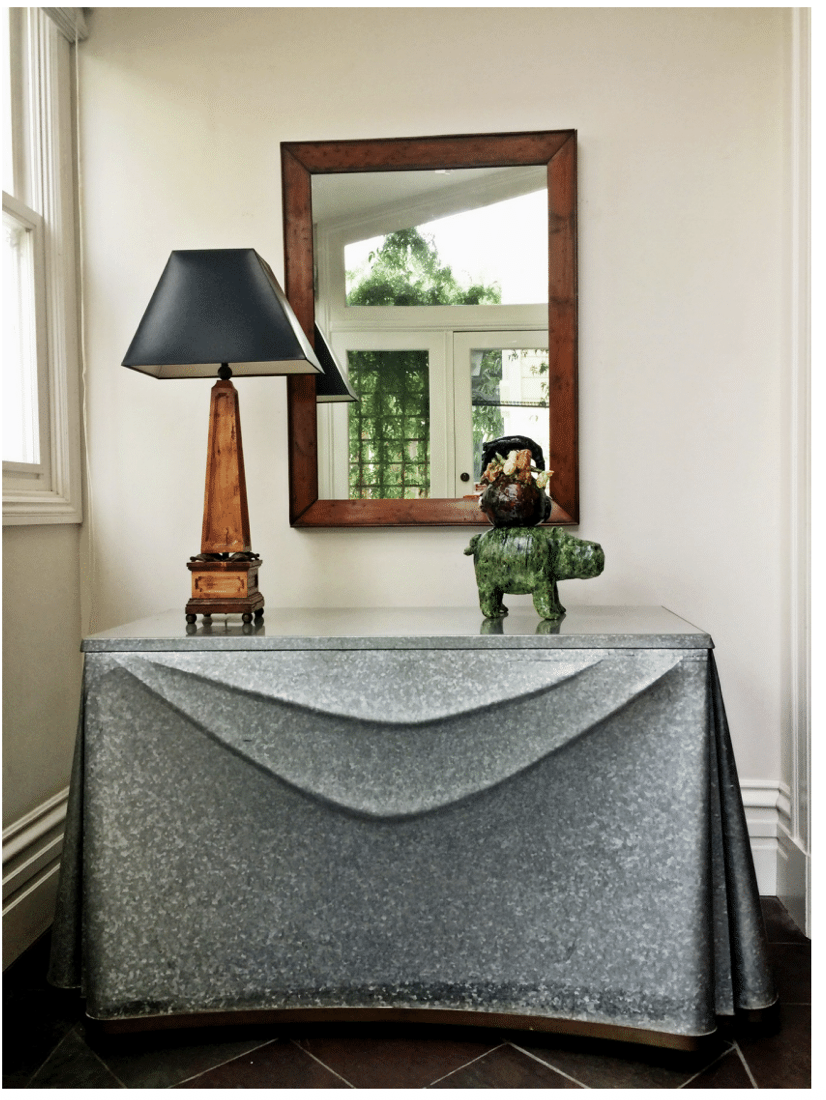
When we bought our house on Presidio Avenue the first thing I asked John was to design a dining table for us, to which he readily agreed. By then I was familiar with his work featured in the shelter magazine press. John’s signature galvanized sheet metal table with pleats and folds and trimmed with a brass ribbon ascended to iconic status almost immediately.
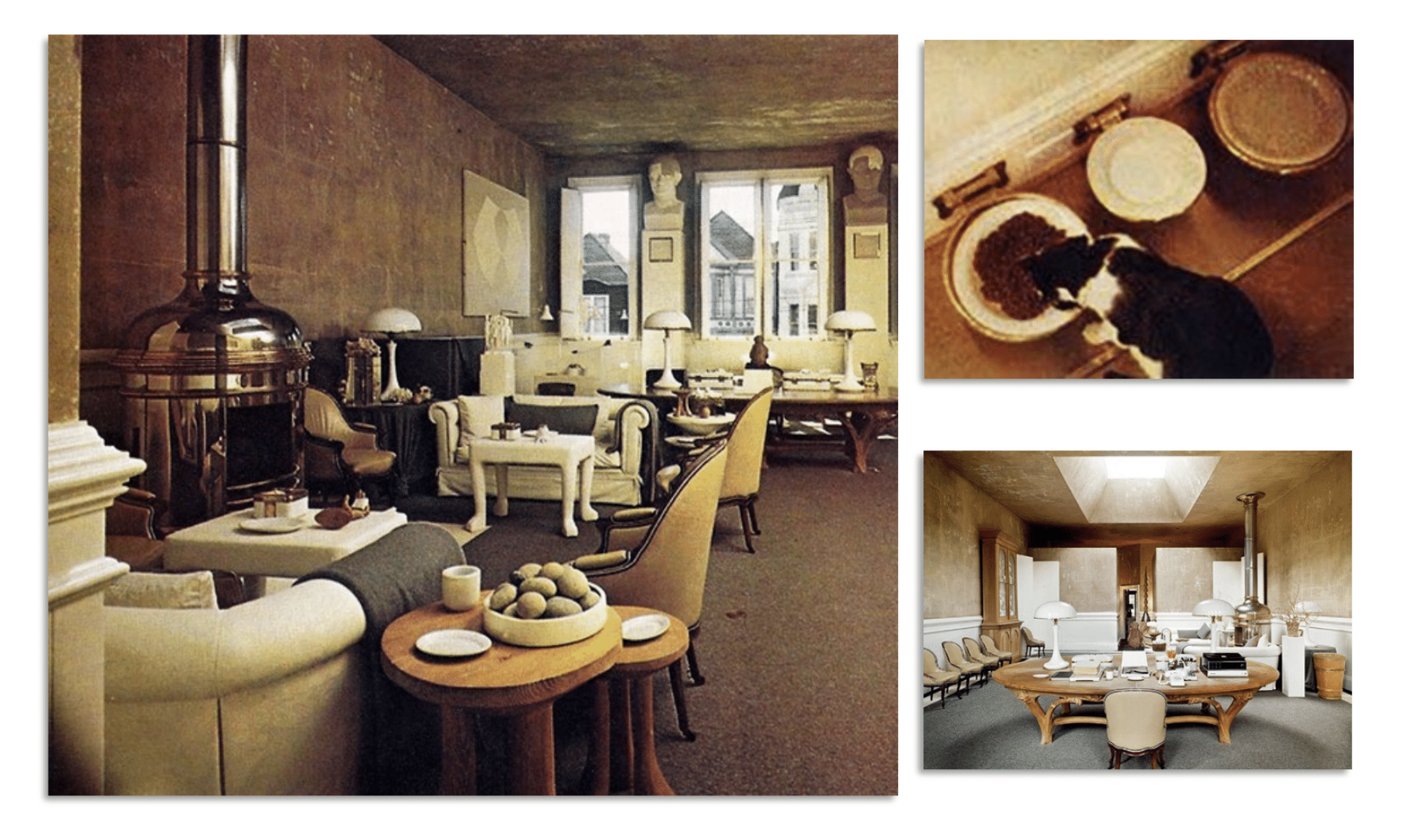
I had seen his Etruscan-inspired tables, some with lion paws, some with hoofed feet, which were cast in white plaster that weighed a ton. (All the better to deter clients from moving the furniture, he had drolly informed us over coffee.) I had seen the three-legged African stools that came in varying heights. And best of all, I had been to the inner sanctum, the holiest of holies, the firehouse itself. The firehouse? Where do I begin? You entered through the garage, climbed a flight of woodstairs to the second floor living room (the former dormitory) and landed at a bright white lacquered door that opened into a remarkable high-ceilinged space, a ”stately pleasure dome” decreed not in Xanadu by Kublai Khan, but by the effortlessly chic John Dickinson. One corner was anchored with a gleaming brass and stainless-steel wood-burning stove. On the opposite street-facing wall two colossal busts, classically Roman in scale and demeanor, surveyed the room, perched atop their towering pedestals that stood between the shuttered windows. Ancient-looking distressed walls were juxtaposed with high-lacquered white wainscoting. A stark white leather-draped table flanked a sofa upholstered in the same stark white leather. A massive glass-front curio cabinet revealed souvenir store African sculptures that had been enameled white—not that anyone would guess their provenance from the elegant manner in which they were displayed. Your eyes flitted from one visual delight to the next -a rustic natural wood desk/dining table with carved tree limbs for legs; luxurious gray flannel cloth thrown over a table and knotted at the hem or tossed invitingly over a sofa; custom made retractable brass holders for dishes for the cat were mounted on the kitchen wall. There was so much to take in! Swanky, it was all so swanky. You became immersed in John’s signature swankiness, and the whole time, he was winking at you.
Then John walked the house by himself ending in the dining room where I was waiting for him “Cantaloupe? No. Paint it all white,” he decreed without hesitation. Everything was to be white, not just the dining room, the whole downstairs: the ceilings, the walls, the virgin redwood wainscoting and trim, including the curved bannister that was the focal point of the stairwell in the foyer. He wanted everything white, a bright arctic white, not warm and creamy. With the palette settled, John took my hand in his. “There is much more to this than a dining table, my dear. Will you let me help?”
At this point, Dear Reader, need I tell you I went weak at the knees knowing that John was taking me under his wing and he was going to make everything just right?
John asked about budget (my grandmother had left me a small inheritance and that’s what we had to work with) and he ticked off what we needed to do right away: window treatments, tables and seating. John took on Forrest and me knowing ours was not a one-fell-swoop job. We would be doing things incrementally, slowly replacing family hand-me-down brown furniture and thread-worn carpets, but all according to John’s master plan. John would do drawings, oversee production and select fabrics. He suggested we order some of his ready-made pieces through his wholesale office to stretch our resources. John used the same white canvas as his garage curtains for our living room. He took me in his Jaguar to the canvas store on South Van Ness where we picked out heavy weight canvas and the woven binding used for edging. The canvas was understated and stiff enough not to require lining. He repeated the same white canvas for window coverings throughout the house.
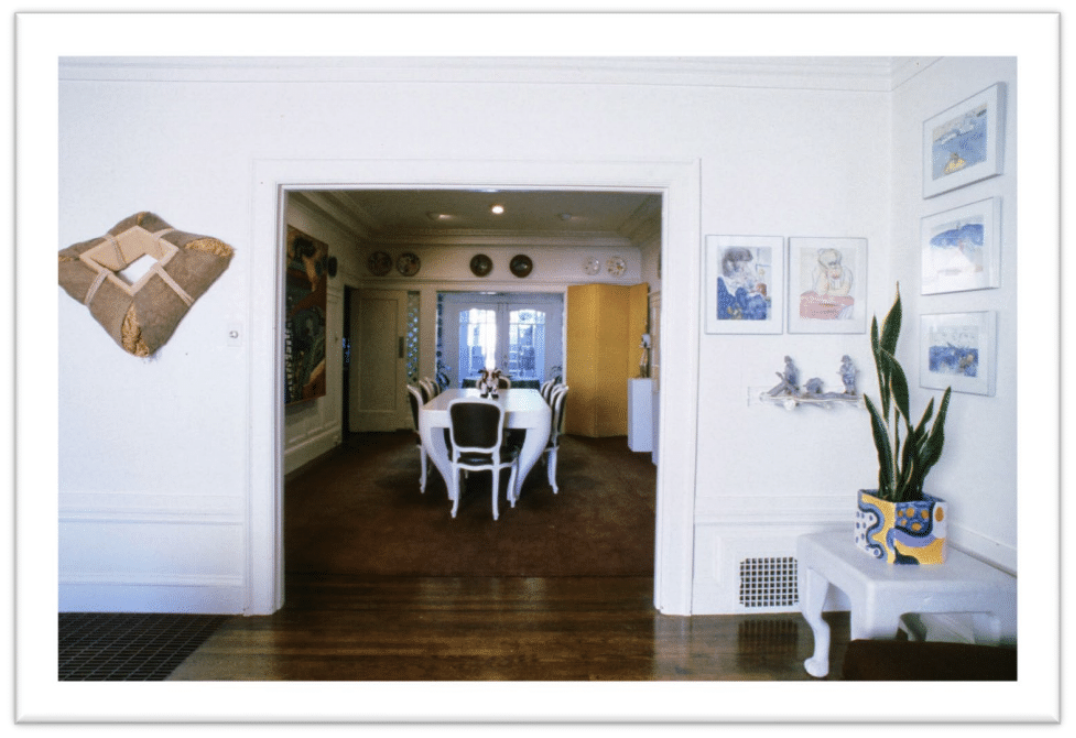
Interior view of the Jones dining room© 1987 used with the permission of Patrick LoCicero
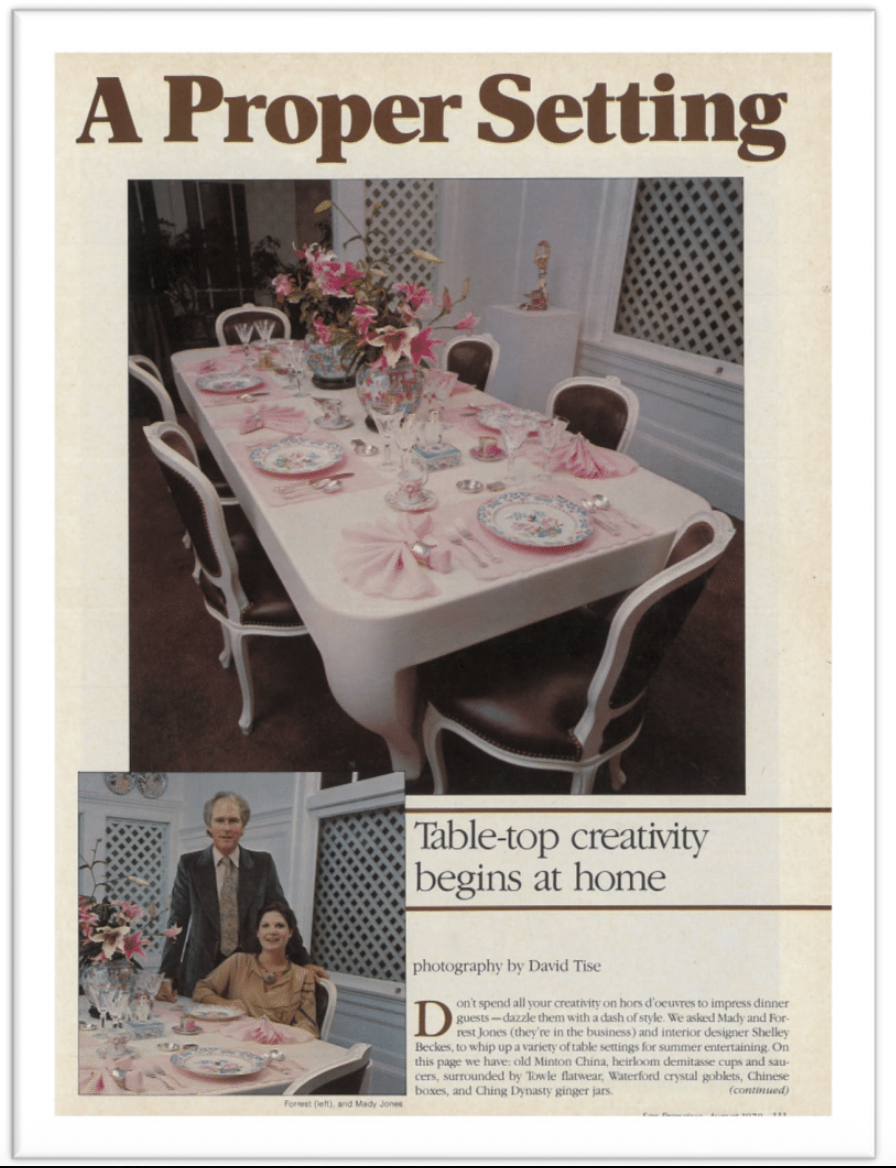
I did something I should not have done, and I don’t know what I was thinking, perhaps it just shows I wasn’t thinking. I realize it was a great faux pas. John took it in stride and behaved as the gentleman he was. During this time, I purchased a pair of French walnut armchairs with cabriole legs in the style of Louis XIV from an absolutely mad and insanely talented antiques dealer named Lillian Williams whose shoulder-length cascade of black curls resembled that of the Sun King himself. She was one of our basket vendors for our store, I was in her Jackson Square showroom frequently, and it just happened--an impulse buy! John was shocked to see them on his next visit and it was then that I realized I had encroached on his vision. John was far too elegant to ask what I had paid but it may have galled him that they came from Lillian who was notorious for her astronomically high mark-ups while he was being uncharacteristically frugal with us. “You know they are 19th century copies of 17th century chairs? Copies of copies! Paint them white as well!” he said dismissively. And didn’t mention them again. I thought that was the end of that. I knew John’s designs were not for the faint of heart but I had no preconceived notions of what I wanted the dining table to look like. I gave John no suggestions and no parameters nor did John ask for any input from me. I wanted the table to be his vision for the room and I wanted it to be the only one of its kind. Even though our room could have accommodated a grandscale table, John pronounced that there should never be more than eight at a dinner party, no exceptions. Anymore than eight ran up the decibel level and killed the conversation. Keeping an eye to the budget, John said we should forego custom chairs. He had in mind some thoroughly respectable reproductions from a local family-run workshop he favored. We set a date two weeks out to reconvene to look at drawings. John arrived wearing a tweed jacket with wheat jeans and carrying his designs rolled up under his arm. There should havebeen a drum roll as Forrest and I watched him slide off the elastic band and spread out the sepia-tinted pages on the kitchentable. The dining table design was first. Before John could say a word, Forrest blurted out, “Look at those legs!” The design of the table was, indeed, all about the legs. The table was at the same time like nothing I had seen before and the essence of every cabriole leg I had ever seen. It was pared down to its simplest curvilinear form. The legs were husky, canted inward, with no frills, no embellishments. Archetypal. Elegant. Swanky—there’s that word again. According to the Encyclopedia Britannica, a cabriole leg is “the leg of a piece of furniture shaped in two curves—the upper one convex, the lower one concave. Its shape was based on the legs of certain four-footed animals. Known by the ancient Chinese and by the Greeks, it returned to fashion in European the late 17th century, when it was incorporated into the more curvilinear styles introduced by the English, Dutch, and French.” I had a visceral reaction to seeing the drawing, a real thunderbolt-love-at-first-sight reaction. John specified the table design was to be constructed of solid birch and lacquered a stark white eggshell finish.John stressed how low maintenance the table would be. You just used 409™ or other such spray to clean it, and if it yellowed or showed signs of wear you just re-lacquered it. Easy peasy. I wasn’t thinking about maintenance. I was thinking how divine that table was going to look in our dining room.
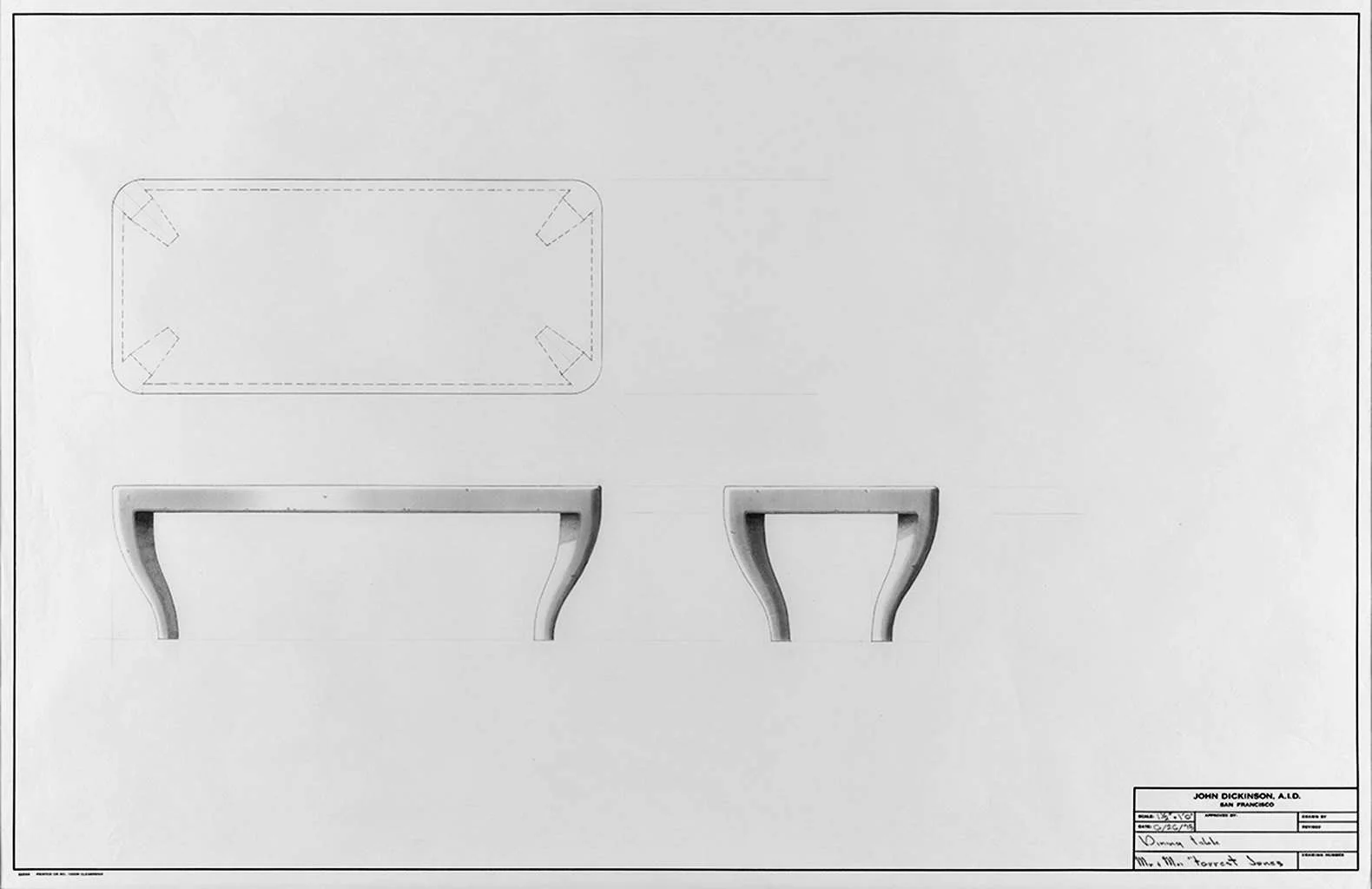
Next John revealed his drawings for a round lamp table in the living room that would also be made of solid birch and lacquered stark white and repeat the cabriole legs. He also recommended two of his signature slipper chairs for the livingroom and a loveseat for the foyer that was double the size of one of these chairs. All would be covered in Clarence House chocolate brown linen that contrasted nicely with the white canvas curtains. Those “copies of copies French armchairs”would be covered in rich garnet linen, which would repeat as a drape for a round table in the center of the foyer. The eight dining chairs, armless versions of the Lillian chairs with cabriole legs, would be upholstered in chocolate brown leather. Under John’s laser-like vision, it all came together very simply. When Larry saw the drawing for the dining table he called it John’s homage to Jean Michel Frank. As I was yet new to all of this, Larry pulled out one of the big picture designer tomes he kept in his office and brought me up to speed on the man who is reputedly the most influential French designer of the 1930s and 1940s. His clients included the designer Elsa Schiaparelli and the fabulously rich Nelson Rockefeller. Frank, whose favorite color was white, was acclaimed for“le style Frank”—pared down designs fabricated in the most exquisite materials. Frank’s design for the de Noialles’ salon in their hôtel particulier in Paris was made famous with the publication of Man Ray’s black and white images in 1929.
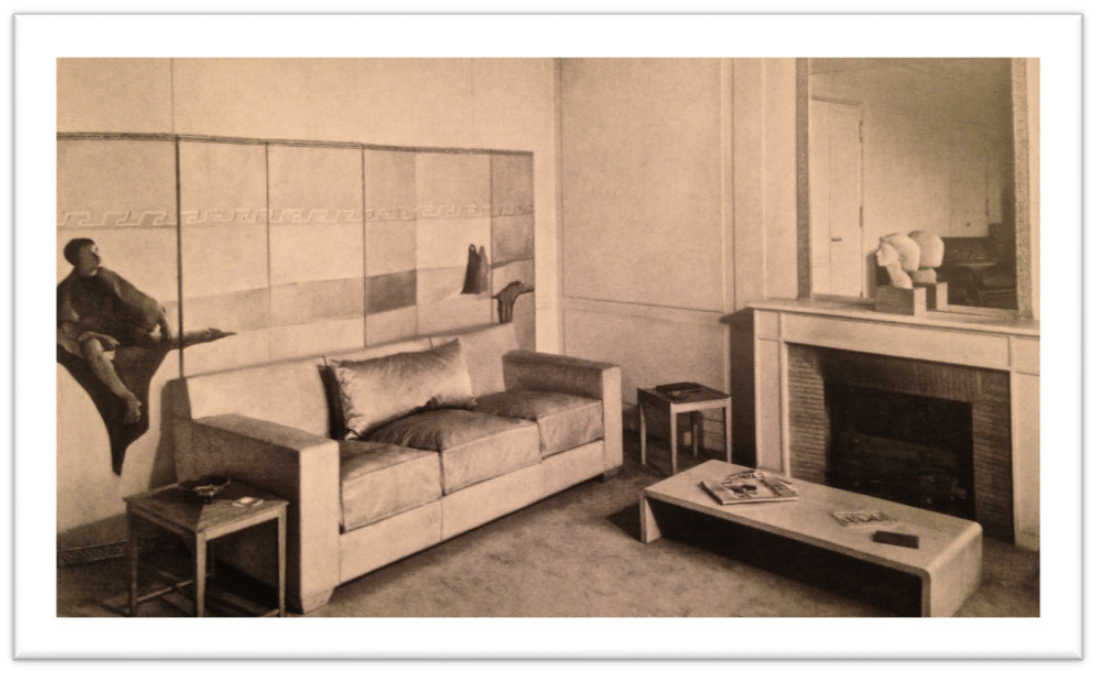
Clare Artaud’s residence designed by Jean Michel Frank, 1936 Copyright attribution TBD
Pacific Heights was John’s home turf and he would often pop in when he was in the neighborhood. One day he rang my bell with two pieces of furniture at his feet. A client had refused these stark white hand-carved wood prototypes for plinths. Did I want them at his cost? I didn’t have to ask, “what’s a plinth?” because I already knew from the colossal heads at thefirehouse that what you and I call pedestals, John called plinths. Of course, Dear Reader, I leapt at the opportunity and John and I lugged them to either side of the mantelpiece where they looked made-to-order.
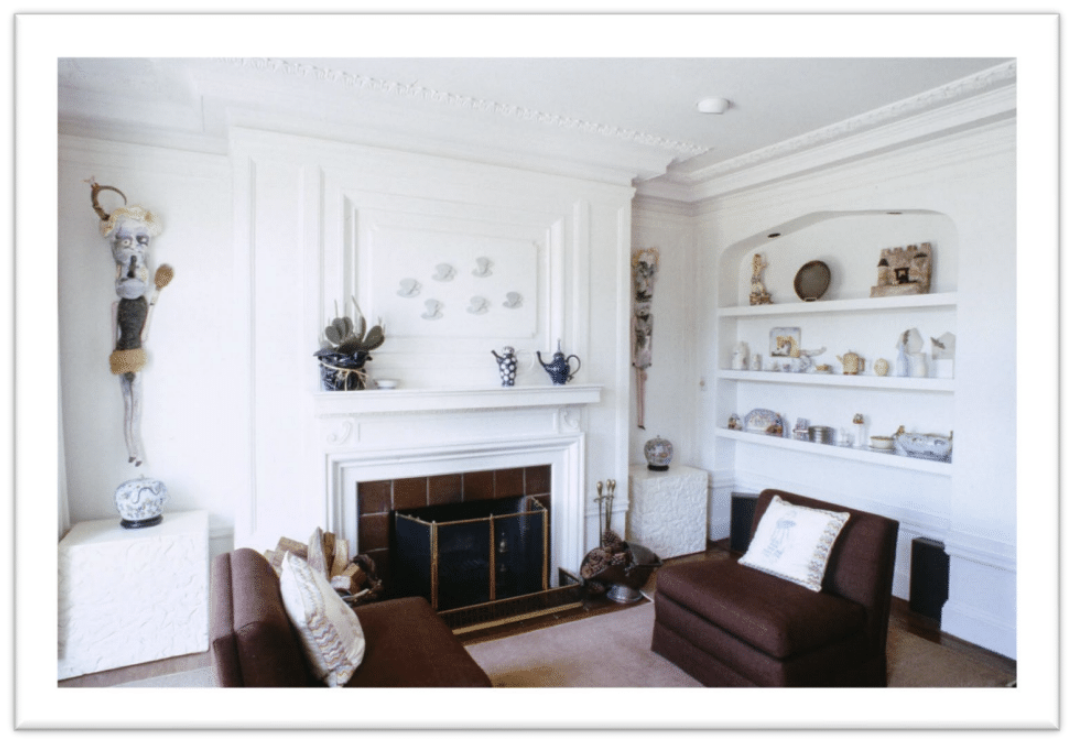
Across from us on Presidio Avenue, Lynne and Neal Fox (I. Magnin’s executive merchandise manager) commissioned John to do their house—juxtaposing their trompe l’oeil quarry-stone dining table with butter-soft beige leather banquettes. Downthe block lived Bonnie and Phil Schlein, Macy’s CEO, who gave John that watershed show of his furniture designs in 1977. Out on Presidio Terrace, John did the interior for Elaine and Donald Magnin’s Julia Morgan-designed house. His whimsical coffee table inspired by wooden packing crates was offset by the understated elegance of his iconic galvanized sheet steel table with brass trim. John launched his to-the–trade furniture and accessories line from an office in the Victorian next to Larry Maloney’s store. Close by was the Victorian owned by artist Ralph du Casse for whom John designed a sleek stainless steel and brass four-poster bed that now belongs in the collection of the San Francisco Museum of Modern Art (SF MOMA).Carlene Safdie sold chic French sportswear at her Dickinson-designed “O” boutique one block west of Presidio on Sacramento Street. She and her husband Ed were close to John and eventually inherited his estate including the firehouseand the copyrights to his designs. They generously donated all of John’s original drawings to SFMOMA where they may be viewed online. https://www.sfmoma.org/artist/John_Dickinson/
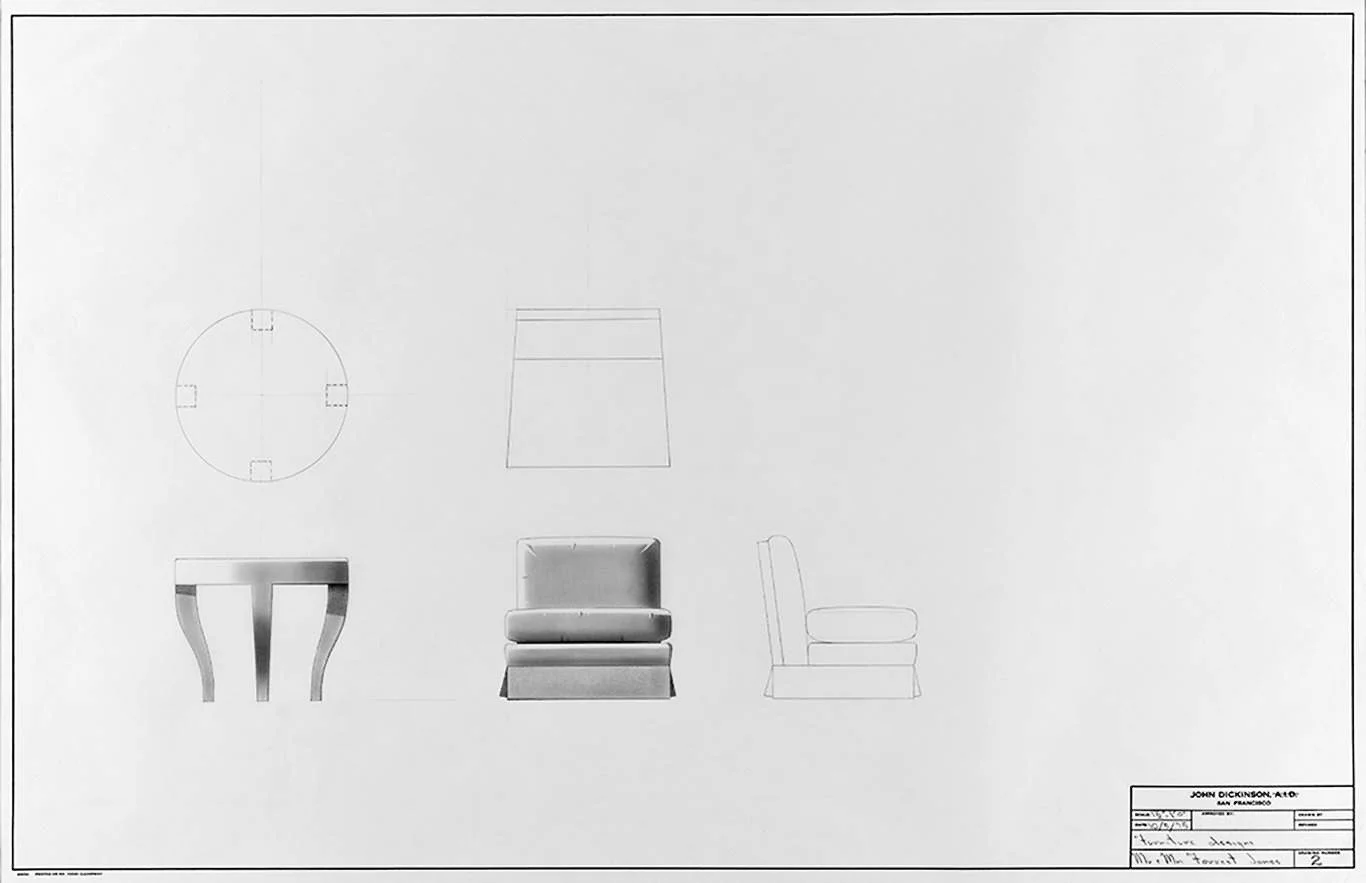
I never asked John why he chose cabriole legs for the dining table but I am sure it had to do with those Lillian chairs. John was winking at me. He had a wicked sense of humor. That was his charm. That, and being such a gentleman. When all is said and done, the table is superbly elegant. And it’s the only one. And all eight very good repro chairs lacquered a starkwhite eggshell finish and upholstered in the finest grade leather cost less than Lillian’s two. I learned so much from John and remember him so vividly. I can still picture him, Dear Reader, tootling around Pacific Heights in that swanky Jaguar of his with the rattan caning on the sides.
I had seen his Etruscan-inspired tables, some with lion paws, some with hoofed feet, which were cast in white plaster that weighed a ton. (All the better to deter clients from moving the furniture, he had drolly informed us over coffee.) I had seen the three-legged African stools that came in varying heights. And best of all, I had been to the inner sanctum, the holiest of holies, the firehouse itself. The firehouse? Where do I begin? You entered through the garage, climbed a flight of wood stairs to the second floor living room (the former dormitory) and landed at a bright white lacquered door that opened into a remarkable high-ceilinged space, a ”stately pleasure dome” decreed not in Xanadu by Kublai Khan, but by the effortlessly chic John Dickinson. One corner was anchored with a gleaming brass and stainless-steel wood-burning stove. On the opposite street-facing wall two colossal busts, classically Roman in scale and demeanor, surveyed the room, perched atop their towering pedestals that stood between the shuttered windows. Ancient-looking distressed walls were juxtaposed with high-lacquered white wainscoting. A stark white leather-draped table flanked a sofa upholstered in the same stark white leather. A massive glass-front curio cabinet revealed souvenir store African sculptures that had been enameled white—not that anyone would guess their provenance from the elegant manner in which they were displayed. Your eyes flitted from one visual delight to the next--a rustic natural wood desk/dining table with carved tree limbs for legs; luxurious gray flannel cloth thrown over a table and knotted at the hem or tossed invitingly over a sofa; custom made retractable brass holders for dishes for the cat were mounted on the kitchen wall. There was so much to take in! Swanky, it was all so swanky. You became immersed in John’s signature swankiness, and the whole time, he was winking at you.Shortly after the dining table conversation I asked John what he thought about painting the dining room walls a shade of cantaloupe. That took him back a bit, but he saidhe’d need to have a look and we set a time for him to visitthe house the next day. Ours was a typical Edwardian,paneled with dark redwood wainscoting throughout the high-ceilinged first floor. The symmetrical living room featured twin French door balconies overlooking the street as well as a redwood mantelpiece. Glass-paned doors framed the formal dining room on both ends, separating it from a spacious foyer in front and a breakfast alcove in the rear. John’s immediate reaction to setting foot in the foyer was to self-mockingly cover his eyes with his hand. “Those doors have to go! Get rid of the doors!” he said feigning jest. No argument there.
Remembering John
-John Dickinson-
1920-1982
By Mady Jones
Even before I met John Dickinson, I was aware of him, although not by name, and not by reputation. I was aware of the car he drove, a snazzy black Jaguar Mark I sedan with rattan caning on the doors. I was aware of the dapper white-haired man behind the wheel well before I knew it was his car and it was he who was driving. This was the early 70s when I used to see the distinctively marked vehicle tootling around San Francisco's Pacific Heights district when it wasn't parked in the recessed driveway of an all-white Victorian firehouse on Washington Street near Baker that Dickinson had converted to his residence. The firehouse doors swung open to reveal floor-length white canvas curtains tied back theatrically to frame the inside parking area with its original firemen's pole intact. All of it-- the style, the whimsy, the understated elegance-- I would come to discover was quintessentially John Dickinson.